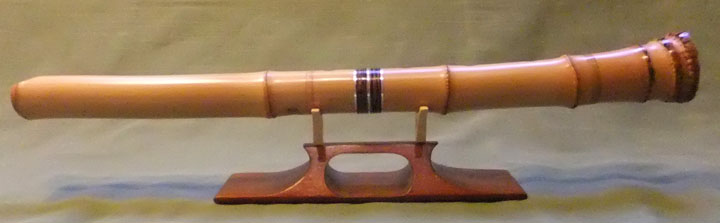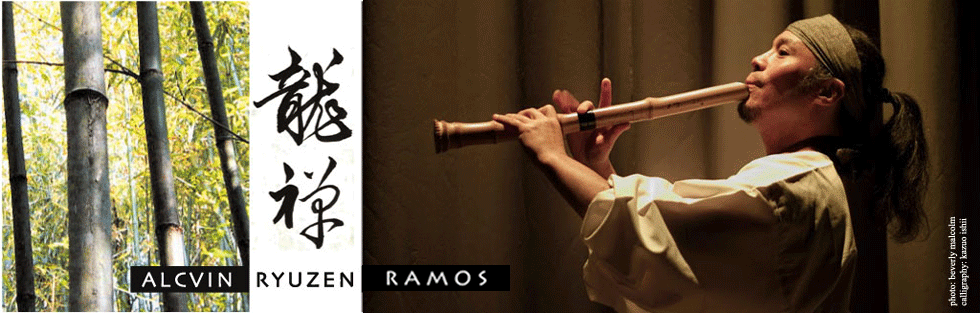
JINASHI SHAKUHACHI MAKING STEPS:
- Take Tori (Bamboo Harvesting)
- Abura Nuki (Moisture extraction)
- Chikuzai Erabu (choosing the bamboo)
- Tame no Sagyo (bamboo bending)
- Fushi Nuki (node perforation)
- Nekko no Yasurigake (root end formation)
- Kanjiri/ago giri (forming the the ends)
- Zetsumen Kezuru (formation of chin rest)
- Teana akeru (hole drilling)
- Choritsu (tuning)
- Binding
If you’re interested in having Alcvin craft a jnashi shakuhachi flute for you, please email him at: ryu.zen18@gmail.com. Please specify prefered length, bore diameter, pitch, etc.
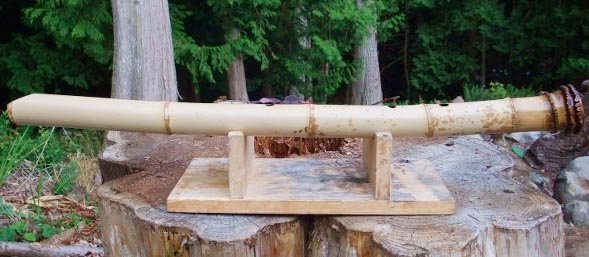
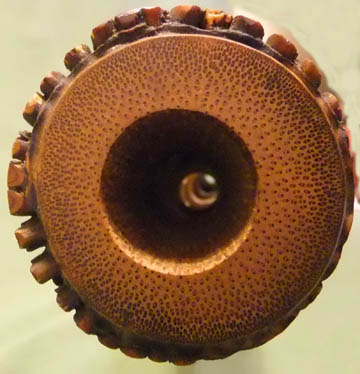
JIARI SHAKUHACHI MAKING STEPS:
- Chikuzai Erabu: Choosing the bamboo
- Warming bamboo; heat preparation
- Tame no sagyo: straightening bamboo
- Forming the flute shape
- Kanjiri kiri: cutting off the end
- Nakatsugi-kiri: separating the shaft in two
- Gekan fushi nuki: opening the flute by removing the fushi joints
- Hozo hori: mortise joint, connecting insert preparation
- Ware maki: anti-crack reinforcement binding
- Hozo ire: installment of tenon, connecting piece
- Setchaku: bonding of hozo to shakuhachi
- Hozo (connector) installation
- Te-ana shirushi tsuke; marking position of finger holes
- Opening of te ana, finger holes
- Zetsumen giri: mouthpiece shaping cut
- Ago ake: shaping chin piece
- Utaguchi hori: mouthpiece insert preparation
- Utaguchi ire: installation of mouthpiece insert
- 3 types of mouthpieces: Fuke, Kinko, Tozan
- Utaguchi installation
- Naka kesuri: honing the flute shaft
- Seshime: natural, strengthening lacquer applied inside flute
- Ji-oki: application of putty
- Naka tori: honing of flute internals
- Guage test: flute internal check
- Choritsu: tuning
- Naka nuri and uwa nuri: application of lacquer
- Muro kawaki: moisture holding lacquer drying box
- Migaki: polishing with an uzukuri brush
- Fuki urushi: a lacquer application and removal
- Nakatsugi: ornamental gold of silver-lined brass ring to protect and secure connecting piece
- Wakka: the brass ring is polished for strong seal
- Tou-maki: securing of nakatsugi by widening rattan around brass ring
- Shi-age: final applications of lacquer
- Yaki-in: branding with maker’s hanko
- Kabu-mikagi: final polishing of the stock root end
- Kanseihin: finished shakuhachi